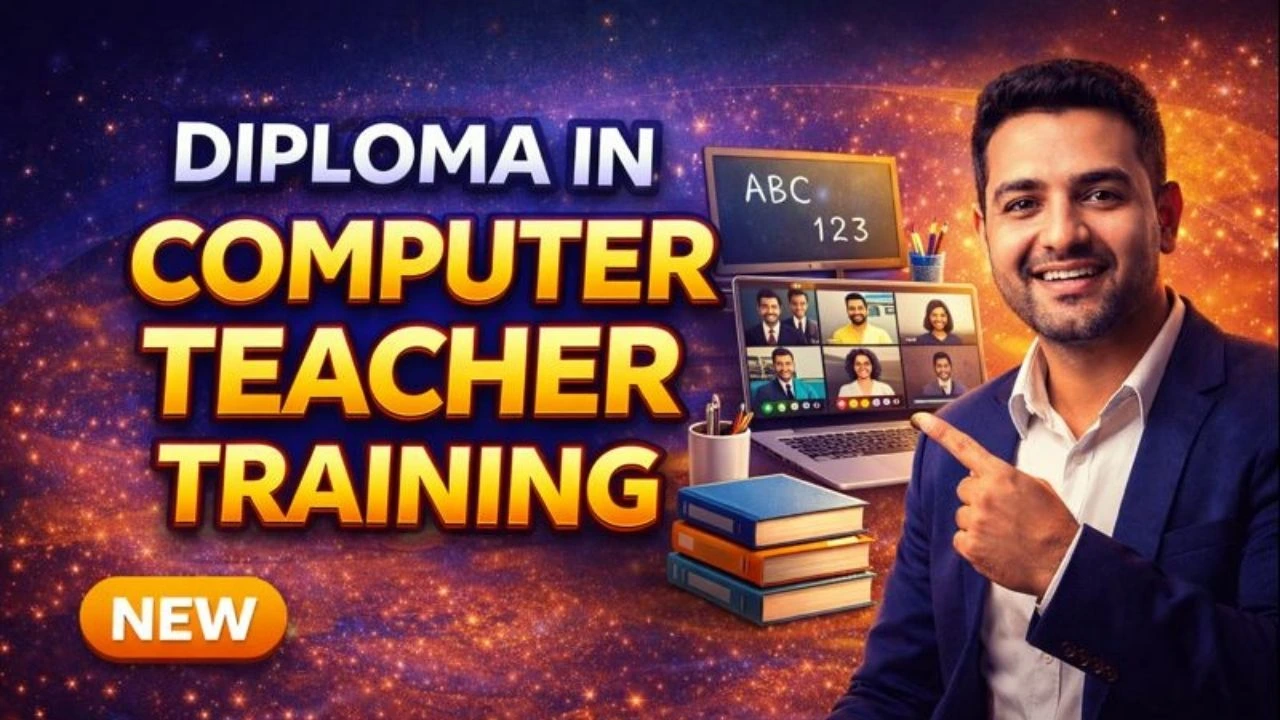
About the Course
Duration: 6–12 months (depending on institute).
Eligibility: 10+2 or equivalent; preference for those with basic computer knowledge.
Mode: Classroom + practical teaching sessions + project-based learning.
Assessments: Written tests, lesson planning, micro-teaching, practical exams, and final teaching demonstration.
Core modules / topics
- Fundamentals of Computers & ICT — hardware, software, operating systems, internet basics.
- Office Productivity Tools — MS Word, Excel, PowerPoint, Google Workspace.
- Basics of Programming — introduction to languages like C, Python, or Scratch.
- Educational Technology & e-Learning — smart classrooms, digital boards, online tools.
- Pedagogy of Computer Teaching — lesson planning, classroom management, teaching strategies.
- Communication Skills & Soft Skills — public speaking, professional communication, student engagement.
- Assessment & Evaluation — designing tests, assignments, and student progress monitoring.
- Child Psychology & Learning Theories — understanding learners’ needs and teaching accordingly.
- Practical Training — micro-teaching sessions, workshops, school/college practice.
- Capstone Project — designing a teaching module, preparing course material, and conducting demo lessons.
Learning outcomes
- Gain proficiency in teaching computer fundamentals and basic programming.
- Plan, organize, and deliver ICT lessons effectively.
- Use modern teaching aids, smart tools, and e-learning platforms.
- Design student assessments and manage classrooms efficiently.
- Build confidence as a computer educator for schools, institutes, or training centers.
5 Career Opportunities
1) Computer Teacher (Schools/Colleges) — Teach ICT and computer basics
What you’ll do: Deliver lessons on computer fundamentals, MS Office, internet use, and basics of coding.
Key skills from course: Pedagogy, ICT tools, lesson planning.
Entry path: Primary/secondary schools, junior colleges, vocational institutes.
2) Computer Instructor (Training Institutes) — Train students/professionals
What you’ll do: Conduct short-term courses on software, typing, and internet basics.
Key skills from course: Hands-on software knowledge, teaching skills.
Entry path: Private computer academies, community centers, NGO skill programs.
3) Corporate IT Trainer — Train employees in organizations
What you’ll do: Provide training on office tools, email etiquette, and digital literacy.
Key skills from course: Communication, professional training, ICT knowledge.
Entry path: Corporate training companies, in-house IT training teams.
4) E-Learning Instructor / Online Tutor — Teach computers via digital platforms
What you’ll do: Conduct online classes, design e-learning modules, record video tutorials.
Key skills from course: Online teaching platforms, digital content creation.
Entry path: Online teaching portals, freelance tutoring, EdTech companies.
5) Freelance Computer Educator — Offer private/commercial training
What you’ll do: Teach computers to individuals, small groups, or professionals.
Key skills from course: Teaching, curriculum design, client handling.
Entry path: Home tutoring, freelance online classes, independent training ventures.